Recycling has become part of everyday life for households and businesses across Southern Colorado. But while most people know what to recycle, fewer understand how recycling actually works once it leaves the curb. Single-stream recycling has changed the process in a big way by making recycling easier and more accessible, while also placing greater responsibility on waste haulers and processing facilities to get it right behind the scenes.
At Earthwise Waste Solutions, single-stream recycling plays an important role in helping communities recycle more effectively while reducing landfill waste. This guide explains how single-stream recycling works, why it matters, and how everyday recycling habits can make a meaningful difference.
What Is Single-Stream Recycling?
Single-stream recycling is a system where recyclable materials such as cardboard, paper, plastic containers, metal cans, and glass are all placed into one recycling bin. Instead of sorting items by material type at home or at work, everything goes into a single container and is sorted later at a specialized facility.
This approach removes many of the barriers that once made recycling confusing or inconvenient. By simplifying the process, single-stream recycling encourages more people to participate consistently.
Today, single-stream recycling is the most common method used for curbside recycling programs across the United States.
How Single-Stream Recycling Works Step by Step
Step 1: Collection
Recyclables are placed loosely in a single recycling cart at homes, businesses, and job sites. Earthwise Waste Solutions collects these materials on scheduled routes, similar to regular trash service.
One important rule at this stage is to avoid plastic bags. Bagged recyclables cannot be properly sorted and often end up being removed as contamination.
Step 2: Delivery to a Materials Recovery Facility
After collection, recyclables are transported to a Materials Recovery Facility, often referred to as a MRF. These facilities are designed specifically to sort mixed recyclable materials into clean, usable streams.
Step 3: Initial Screening
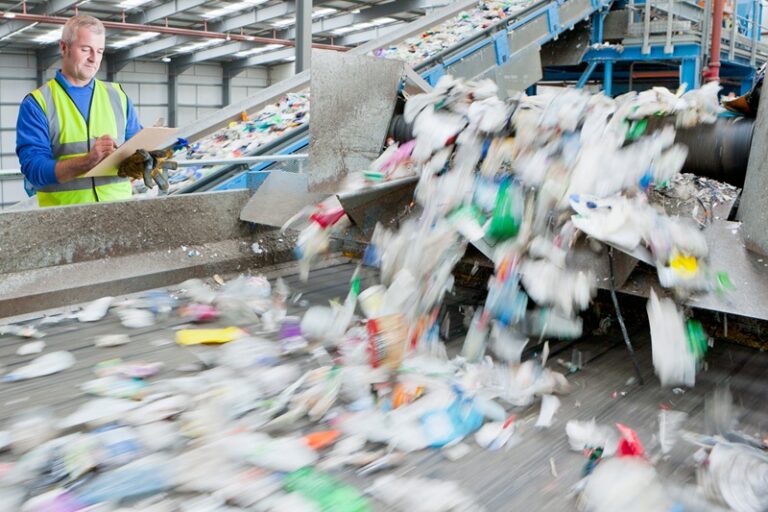
At the facility, materials move along conveyor belts where large items, plastic bags, and non-recyclable debris are removed. Cardboard is often separated early because of its size and weight.
Step 4: Mechanical and Optical Sorting
Modern recycling facilities rely heavily on technology to separate materials efficiently. Magnets pull out steel and tin cans. Eddy currents separate aluminum. Optical sorters use infrared light to identify and separate different types of plastics. Screens and air systems help separate paper from containers.
These systems allow large volumes of recyclables to be sorted quickly while maintaining accuracy.
Step 5: Manual Quality Control
Despite advanced technology, human oversight remains essential. Workers remove contamination and correct sorting errors to improve the quality of recovered materials.
Step 6: Baling and Shipping
Once sorted, materials are compacted into bales and shipped to manufacturers. These materials are then turned into new products such as cardboard boxes, packaging, building materials, and new containers.
Why Single-Stream Recycling Matters
It Increases Recycling Participation
The simplicity of single-stream recycling encourages higher participation rates. When recycling is easy and convenient, people are more likely to do it correctly and consistently. Communities that switch to single-stream recycling often see an increase in the volume of materials recycled.
It Reduces Landfill Waste
Every recyclable item that stays out of the trash helps reduce landfill use. Diverting waste from landfills conserves space, reduces methane emissions, and extends the life of existing disposal sites.
It Supports a Circular Economy
Single-stream recycling helps keep valuable materials in circulation. Cardboard becomes new boxes, plastics are reused in packaging or textiles, and metals are recycled repeatedly without losing quality. This reduces reliance on virgin materials and lowers environmental impact.
It Saves Energy and Natural Resources
Manufacturing products from recycled materials typically uses less energy than producing them from raw resources. Recycling aluminum, paper, and plastics significantly reduces energy consumption and resource extraction.
It Helps Meet Sustainability Goals
Many businesses, municipalities, and organizations have sustainability goals focused on waste diversion and environmental responsibility. Single-stream recycling programs make those goals easier to reach by simplifying participation and improving recovery rates.
Common Materials Accepted in Single-Stream Recycling
While accepted materials can vary slightly by region, most single-stream recycling programs include:
- Cardboard and corrugated boxes
- Paperboard such as cereal boxes and paper towel tubes
- Office paper, mail, newspapers, and magazines
- Plastic bottles and containers labeled #1 through #5
- Aluminum cans
- Steel and tin cans
- Glass bottles and jars
Items should be empty, clean, and dry before being placed in the recycling bin.
What Does Not Belong in Single-Stream Recycling
Contamination is one of the biggest challenges facing recycling programs. When non-recyclable items enter the recycling stream, they can damage equipment, slow processing, and reduce the value of recovered materials.
Common contaminants include:
- Plastic bags and plastic film
- Food-soiled containers
- Styrofoam
- Garden hoses, cords, and wires
- Clothing and textiles
- Batteries and electronics
- Medical or hazardous waste
If you are unsure whether an item belongs in the recycling bin, it is better to leave it out than risk contamination.
The Challenges of Single-Stream Recycling
Single-stream recycling offers clear benefits, but it also comes with challenges that require careful management.
Higher Contamination Rates
Because materials are mixed together, contamination rates tend to be higher than with source-separated recycling. Education and clear recycling guidelines are critical to keeping programs effective.
Increased Processing Complexity
Sorting mixed materials requires advanced equipment and skilled labor. Recycling facilities must continually adapt to new packaging materials and evolving market standards.
Recycling Market Fluctuations
Recycling markets change over time, and material quality plays a major role in determining value. Cleaner recycling streams help support stronger and more sustainable recycling markets.
Earthwise Waste Solutions works closely with recycling partners to support responsible processing and high-quality material recovery.
How Residents and Businesses Can Improve Recycling Outcomes
Everyone has a role to play in making single-stream recycling successful.
Rinsing containers helps prevent food residue from contaminating paper and cardboard. Keeping recyclables loose rather than bagged allows sorting equipment to work properly. Flattening cardboard saves space in recycling carts and collection vehicles. Following local recycling guidelines reduces confusion and improves overall recovery rates.
When questions arise, checking local resources or asking for guidance helps prevent contamination before it starts.
Single-Stream Recycling for Businesses
Businesses often generate large volumes of recyclable materials such as cardboard, paper, and packaging. Single-stream recycling makes it easier for employees to recycle correctly without disrupting daily operations.
For businesses, recycling programs can help reduce landfill costs, improve sustainability reporting, support environmental goals, and maintain cleaner, more organized facilities.
Earthwise Waste Solutions offers recycling programs designed to meet the needs of offices, retail centers, restaurants, construction sites, and industrial operations.
Why Single-Stream Recycling Matters Locally
In Southern Colorado, responsible waste management supports environmental health, community growth, and long-term sustainability. Recycling reduces strain on local landfills, protects natural resources, and supports regional recycling infrastructure.
Earthwise Waste Solutions proudly serves Colorado Springs, Pueblo, Teller County, and surrounding communities with dependable recycling services focused on doing things the right way.
The Future of Single-Stream Recycling
Recycling technology continues to evolve. Advances in optical sorting, artificial intelligence, and automation are improving material recovery while reducing contamination. At the same time, packaging manufacturers are shifting toward designs that are easier to recycle.
Education, collaboration, and responsible participation will continue to shape the future of single-stream recycling as systems become more efficient and sustainable.
Key Takeaways
- Single-stream recycling allows all recyclables to go into one bin, simplifying participation
- Materials are sorted at specialized facilities using advanced technology and quality control
- The system increases recycling rates and reduces landfill waste
- Contamination is the biggest challenge, but proper habits make a difference
- Residents and businesses both play an important role in successful recycling programs
- Local recycling efforts support environmental and community health
Single-stream recycling works best when everyone understands how it functions and why it matters. If you are ready to improve recycling at your home, business, or job site, contact Earthwise Waste Solutions today to learn more about their single-stream recycling programs and how easy it can be to recycle smarter while supporting a cleaner Southern Colorado community.


